The Horizon of General Intelligence: A Comprehensive Update on AGI Development Progress in 2026

Introduction: The Dawn of the 2026 AGI Pivot
As of late 2026, the landscape of Artificial Intelligence has shifted from the era of large-scale statistical prediction to the nascent stages of Artificial General Intelligence (AGI). While the 2023-2024 period was defined by generative chatbots, 2026 is recognized as the year of “Reasoning Agents” and “World Models.” The industry has largely moved past the ‘stochastic parrot’ critique, as contemporary systems now demonstrate cross-domain generalization, long-horizon planning, and an intrinsic understanding of physical causality. This report delves into the technical, infrastructural, and ethical milestones achieved in the quest for AGI over the past twelve months.
1. Architectural Breakthroughs: Beyond Transformer Limitations





For years, the Transformer architecture was the gold standard. However, 2026 has seen the rise of Hybrid State Space Models (SSMs) and ‘Sparse Mixture of Experts’ (SMoE) configurations that have solved the quadratic scaling issues of traditional attention mechanisms. These new architectures allow for near-infinite context windows, enabling AIs to process entire libraries of technical documentation or years of video data in a single inference pass.
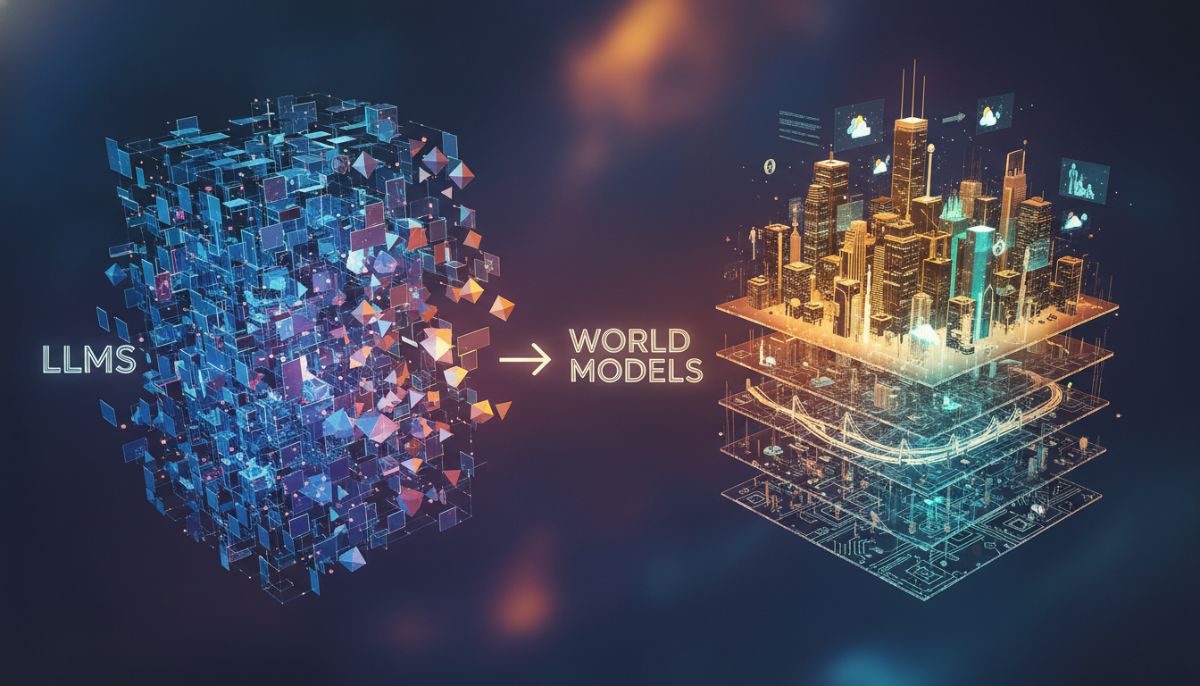
More importantly, the development of “World Models”—pioneered by labs like OpenAI, DeepMind, and Meta—has bridged the gap between text and reality. These systems no longer just predict the next word; they simulate the next physical state. By training on massive amounts of robotic telemetry and first-person video, 2026-era models can predict how objects move in 3D space, which is a fundamental requirement for any system claiming true ‘general’ intelligence.
2. The Compute Renaissance and Energy Autonomy
The hardware constraints of 2024 have been mitigated by the mass deployment of next-generation 2nm silicon. Companies like NVIDIA and specialized startups have moved toward “Optical Interconnects,” significantly reducing the latency between GPU clusters. This has enabled the training of models with parameters exceeding 50 trillion, though the industry is increasingly focusing on ‘algorithmic efficiency’ rather than raw size.
Perhaps the most significant update in 2026 is the energy strategy. Leading AGI labs have now integrated small modular reactors (SMRs) or signed direct power-purchase agreements with fusion research facilities to maintain the massive 24/7 compute loads required for continuous self-improvement cycles. This shift toward “Energy-Compute Sovereignty” has separated the top-tier AGI contenders from the rest of the market.
3. Reasoning, Planning, and the ‘System 2’ Shift
A major hallmark of 2026 AGI progress is the implementation of “System 2 Thinking.” Inspired by human cognitive psychology, these models utilize internal deliberation—a process where the AI ‘thinks’ before it speaks. Instead of immediate token generation, the model runs internal simulations, checks its own logic for fallacies, and searches for the optimal solution pathway.
This has led to the emergence of autonomous software engineering and scientific discovery agents. These are not just coding assistants; they are digital researchers capable of formulating hypotheses, writing code to test them, and iterating on the results without human intervention. In biology and materials science, AGI-lite systems have already discovered more stable battery electrolytes and more efficient catalysts in the first half of 2026 than in the entire preceding decade.

4. The Data Frontier: Synthetic Data and Embodied AI
By 2026, the world effectively ran out of high-quality public human-generated text for training. To overcome this, AGI developers pivoted to two main sources: high-fidelity synthetic data and embodied experience. Synthetic data generators now use game engines and physics simulators to create perfect training environments, allowing AIs to learn from millions of years of simulated experience in weeks.
Furthermore, the integration of AGI cores into humanoid robotics has reached a fever pitch. Systems like Tesla Optimus Gen 3 and Figure 03 are now powered by the same foundational models used for digital logic. This ’embodiment’ provides the sensory feedback necessary for AGI to understand concepts like ‘weight,’ ‘fragility,’ and ‘consequence,’ which are impossible to learn from text alone.
5. Alignment and Global Governance
As the capabilities of these systems approach human-level performance across all cognitive tasks, the focus on “Alignment” has shifted from simple RLHF (Reinforcement Learning from Human Feedback) to RLAIF (Reinforcement Learning from AI Feedback). This involves a ‘constitutional’ approach where a supervisor AI ensures that the primary AGI remains within strictly defined ethical boundaries.
On the global stage, 2026 marked the establishment of the International AI Safety Institute (IAISI), a UN-adjacent body that monitors large-scale training runs. Mandatory ‘kill-switches’ and transparency logs for models exceeding 10^26 FLOPs of compute are now standard across G20 nations, reflecting a cautious but determined push toward the Singularity.

Conclusion: The Road to 2030
The updates of 2026 suggest that we are no longer asking if AGI is possible, but rather how we will integrate it into the fabric of human civilization. The progress in world modeling, reasoning architectures, and compute efficiency has placed us on an exponential trajectory. While the final ‘Turing-complete’ AGI—one that can outperform any human in any creative or analytical task—is still debated, the 2026 milestones have brought us closer than any expert predicted five years ago. We are entering an era of co-intelligence where the boundary between human intent and machine execution is increasingly porous.